
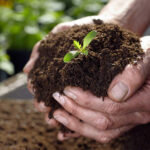

Soil is formed under the influence of pedogenetic processes, which depend on the relief, geological base, climate and plant life. Due to their long-term effect, as well as due to human influence, soils have changed over time and reached different levels of development. In the Republic of Macedonia, there is a great diversity and mosaic of soil cover, with more than 30 soil types.
Regulations for soil |
Soil formation is an extremely slow process and therefore soil can be considered a non-renewable resource.
Soil is a dynamic and complex system with a key role for humans and ecosystems. It provides food and raw materials, serves as a basis for human activities, a habitat for numerous organisms, and a carbon sink. Soil also filters and transforms water and nutrients.
Regulations
Environmental Law
Nature Protection Law
The Law on Agricultural Land
Закон за измени на законот за шуми
Law on Spatial and Urban Planning
Law on Amendments to the Law on Forests
Forest Law
The need for soil protection and integrated soil management is outlined in Вториот Национален еколошки акционен план на Република Македонија 2006 |
The Republic of Macedonia ratified in 2002 the United Nations Convention to Combat Desertification, Particularly in Countries Experiencing Serious Drought – United Nation Convention to Combat Desertification (UNCCD).
The Kyoto Protocol indicates that soil is a major carbon sink that should be protected and enhanced where possible. Carbon sequestration in agricultural soils through certain management practices can contribute to climate change mitigation. The Republic of Macedonia has ratified the United Nations Framework Convention on Climate Change – United Nations Framework Convention on Climate Change (UNFCCC) in 1997 and ratified the Kyoto Protocol in 2004.
The Convention on Biological Diversity – Convention on Biological Diversity (UNCBD), The Republic of Macedonia ratified it in 1997.